Commercial Roof Inspections: What Facility Managers Should Expect
What facility managers in Western Kentucky and Northwestern Tennessee can expect from a commercial roof inspection—and how proactive documentation helps prevent costly surprises.
Commercial roof issues rarely start as major emergencies. More often, they begin as small cracks, loose seams, ponding water, failing flashings, or minor punctures that go unnoticed until they interrupt operations. For facility managers, property owners, and maintenance directors, a professional commercial roof inspection is one of the most practical ways to protect the building, control repair costs, and plan ahead with confidence.
At Premier Roof Solutions, we work with commercial and industrial properties throughout Western Kentucky and Northwestern Tennessee, including Hopkinsville, Madisonville, Dawson Springs, Providence, Princeton, Clarksville, and surrounding communities. Our goal is simple: help decision-makers understand the actual condition of their roof before small problems become expensive disruptions.
If you have been putting off an inspection because you are worried it will automatically lead to a sales pitch or major replacement recommendation, here is what you should actually expect from the process.
Why Commercial Roof Inspections Matter
A commercial roof is not just another building component. It protects inventory, equipment, employees, tenants, production areas, offices, and day-to-day operations. When the roof fails, the cost is rarely limited to roofing work alone. Water intrusion can damage insulation, ceiling systems, electrical components, walls, flooring, and stored materials.
Routine inspections give facility managers a clear picture of roof performance. They also help identify whether the building needs minor maintenance, targeted commercial roof repair, roof restoration, coating, or eventual replacement.
For many businesses, an inspection can also reveal that replacement is not the only option. Depending on the roof type and condition, restoration systems such as fabric-reinforced roofing, metal roof restoration, membrane roof coating, or SPF roofing may extend roof life while helping control long-term costs.
What Happens During a Commercial Roof Inspection?
A professional commercial roof inspection is more than a quick walk across the roof. It should be a structured evaluation of the roof system, drainage, penetrations, seams, flashings, surface condition, and visible areas where water may enter or collect.
1. Initial Roof and Building Review
The process typically starts with a conversation about the building. A roofing professional may ask about the roof’s age, known leak areas, previous repairs, maintenance history, drainage issues, warranty information, and any recent storm damage.
Facility managers should be prepared to share details such as:
- Where leaks have appeared inside the building
- Whether certain issues happen only during heavy rain or wind
- Areas with recurring ponding water
- Previous repair records or roof installation information
- Planned building upgrades or tenant improvements
This information helps the inspection team connect interior symptoms with possible roof-level causes.
Exterior Roof Evaluation Points
Once on the roof, the inspector will look closely at the condition of the roof system. Evaluation points can vary depending on whether the building has a metal roof, single-ply membrane, EPDM/rubber roof, spray foam system, coating system, or another flat or low-slope roof assembly.
Common inspection points include:
Roof Surface Condition
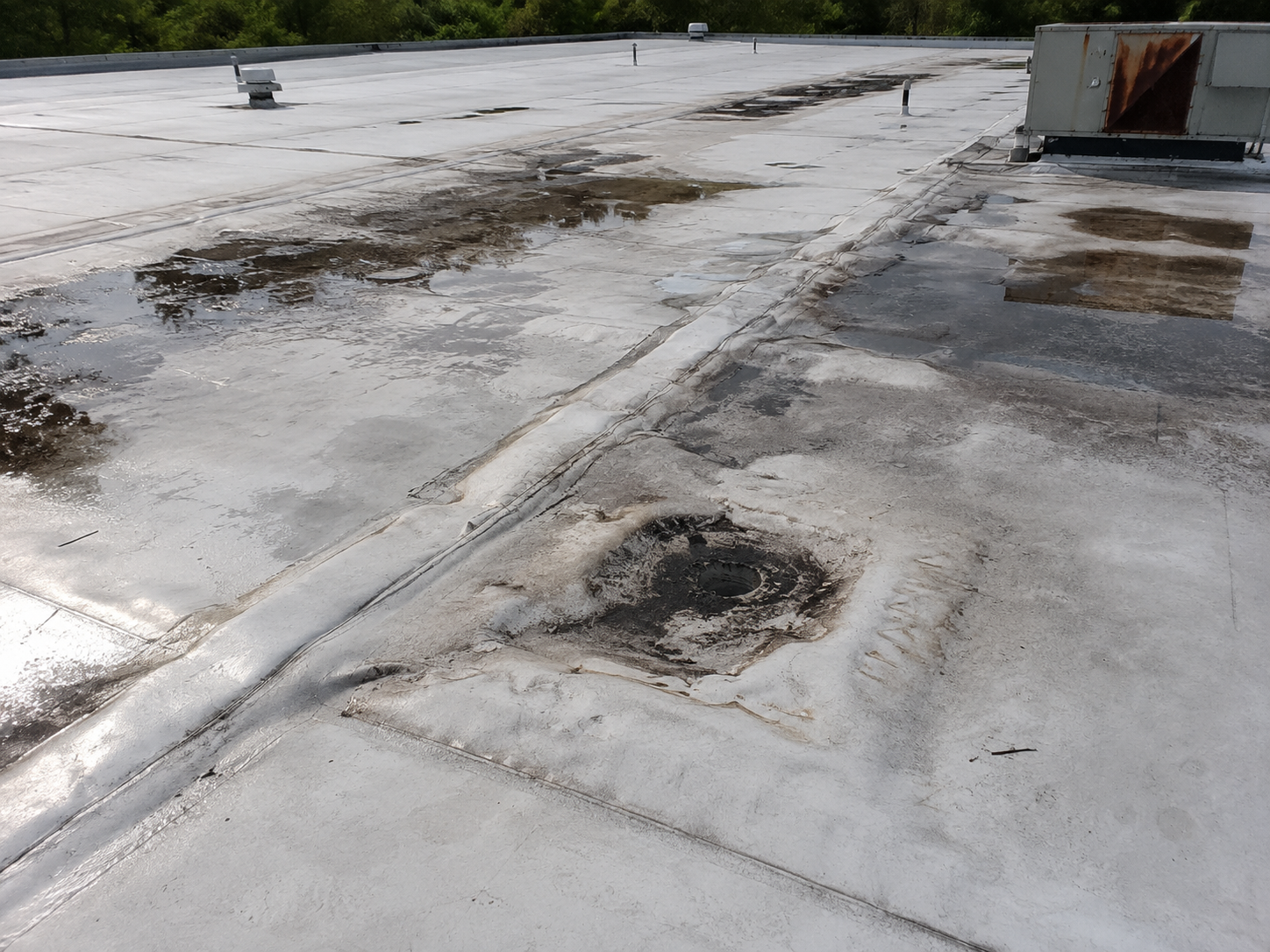
The inspector will check for cracks, blistering, punctures, open seams, loose materials, UV deterioration, membrane shrinkage, coating wear, rust, and areas where the roof surface is no longer performing as intended.
For buildings with aging flat or low-slope roofs, these surface issues can be early warning signs that the roof needs maintenance or restoration before moisture reaches deeper layers.
Seams and Fasteners
Seams are one of the most important areas on many commercial roofs. On metal roofs, fasteners and panel laps are common points of concern. On membrane roofs, open or weakened seams can allow water to enter beneath the roof surface.
A quality inspection should identify whether seam issues are isolated or widespread.
Flashings and Roof Penetrations
HVAC units, vents, pipes, skylights, curbs, drains, and other roof penetrations are frequent sources of leaks. Inspectors will evaluate whether these areas are properly sealed and whether flashing materials have pulled away, cracked, or deteriorated.
This is especially important for commercial buildings with multiple rooftop units or mechanical systems.
Drainage and Ponding Water
Standing water is a major concern for flat and low-slope roofs. Poor drainage can accelerate deterioration, increase structural stress, and create recurring leak problems.
During the inspection, the roofer should check drains, scuppers, gutters, downspouts, low spots, and debris buildup. Facility managers should pay close attention to any recommendations related to drainage because water management is directly tied to roof performance.
Edges, Parapet Walls, and Terminations
Roof edges and termination points often take a beating from wind and weather. The inspector will review edge metal, coping, parapet wall conditions, and transition points where the roof meets walls or other building components.
Problems in these areas can lead to wind uplift, water intrusion, and premature roof failure.
Interior Signs May Also Be Reviewed
A commercial roof inspection may include interior observation when leaks or moisture concerns are present. The roofing contractor may look for stained ceiling tiles, wet insulation, wall discoloration, mold-like growth, active dripping, or patterns that help locate the source of water entry.
This step matters because the visible leak inside the building is not always directly below the roof issue. Water can travel along decking, beams, insulation, and interior systems before showing up in an occupied space.
What Documentation Should Facility Managers Expect?
Good documentation is one of the most valuable parts of a commercial roof inspection. Facility managers should not have to rely on vague verbal comments like “the roof looks rough” or “you probably need repairs.”
A useful inspection report should include clear findings and practical next steps.
Documentation may include:
- Photos of problem areas
- Notes on roof type and visible condition
- Identification of leak-prone areas
- Drainage observations
- Repair or restoration recommendations
- Priority levels for urgent versus future work
- Estimated scope of needed maintenance
- Budget guidance when appropriate
This documentation helps facility managers communicate with ownership, budgeting teams, maintenance staff, insurance contacts, or other stakeholders.
For example, if your building in Hopkinsville, Madisonville, or Clarksville has recurring leaks, a documented inspection can help you decide whether targeted repairs are enough or whether a longer-term restoration system makes more financial sense.
An Inspection Does Not Always Mean Replacement
One of the biggest reasons commercial property owners hesitate to schedule inspections is fear of being told they need a full roof replacement. In reality, a reputable contractor should evaluate the roof honestly and recommend the most practical solution based on condition, budget, and long-term performance.
Some roofs need replacement. Others may only need repair, maintenance, reinforcement, or restoration.
Premier Roof Solutions specializes in commercial systems designed to protect flat and low-slope buildings, including:
- Fabric-Reinforced Roofing Systems
- Metal Roof Restoration Systems
- Single-Ply Membrane Roofing Systems
- Membrane Roof Coating Systems
- SPF Roofing Systems
- EPDM Roofing Restoration
The right path depends on the existing roof, the extent of damage, moisture conditions, drainage, and the owner’s long-term plans for the property.
Cost-Saving Benefits of Commercial Roof Inspections
A roof inspection is not just about finding problems. It is about avoiding more expensive ones.
1. Catching Small Issues Early
Small cracks, failing sealant, loose fasteners, or isolated seam problems are usually easier and less expensive to address than widespread water intrusion. An inspection allows facility managers to handle problems before they affect insulation, decking, inventory, equipment, or interior finishes.
2. Extending Roof Service Life
Routine inspections and timely maintenance can help extend the useful life of a commercial roof. Instead of waiting until the roof is beyond repair, facility managers can plan service work that keeps the system performing longer.
3. Reducing Emergency Repairs
Emergency roof leaks are disruptive and expensive. They often happen during storms, heavy rain, or inconvenient business hours. Proactive inspections reduce the odds of surprise failures by identifying vulnerable areas before severe weather exposes them.
4. Supporting Better Budget Planning
An inspection gives decision-makers real information. Instead of guessing whether the roof needs attention this year, next year, or five years from now, facility managers can plan capital improvements with better accuracy.
This is especially useful for commercial properties, churches, warehouses, retail buildings, manufacturing facilities, agricultural buildings, and office spaces throughout Western Kentucky and Northwestern Tennessee.
5. Identifying Restoration Opportunities
Some commercial roofs can be restored instead of replaced. If the existing roof is structurally sound and has not taken on excessive moisture, roof restoration may provide a cost-effective path forward. This can be especially valuable for metal roofs, membrane roofs, and low-slope commercial systems.
When Should Facility Managers Schedule an Inspection?
Commercial roofs should be inspected regularly, but there are certain times when an inspection becomes especially important.
Schedule a roof inspection if:
- You notice active leaks or ceiling stains
- The roof has not been inspected in the past year
- Your building recently experienced heavy storms or high winds
- You see ponding water after rain
- Energy costs are increasing without a clear reason
- Your roof is nearing the end of its expected service life
- You are planning building improvements or tenant changes
- You are budgeting for repairs, restoration, or replacement
- You manage a property with critical equipment or inventory inside
For properties in areas like Hopkinsville, Madisonville, Providence, Princeton, and Clarksville, seasonal weather can put added stress on commercial roofing systems. Spring and early summer are smart times to evaluate roof condition before heat, storms, and heavy rainfall create bigger problems.
What Facility Managers Should Ask After the Inspection
After the inspection, do not settle for unclear answers. A good roofing contractor should be able to explain what was found, what matters most, and what options are available.
Ask questions like:
- What issues need immediate attention?
- What can be monitored over time?
- Are the problems isolated or widespread?
- Is restoration an option, or is replacement more appropriate?
- Are there drainage issues contributing to roof wear?
- What documentation can be provided for ownership or budgeting?
- What maintenance steps would help extend roof life?
The goal is not just to receive a report. The goal is to make a better decision.
Partner With a Local Commercial Roofing Contractor
Facility managers need straight answers, clear documentation, and practical recommendations. Premier Roof Solutions provides commercial roofing services for businesses and property owners across Western Kentucky and Northwestern Tennessee, with a focus on durable systems, honest evaluations, and long-term value.
Whether your building needs a roof inspection, repair, restoration, coating system, or replacement evaluation, our team can help you understand your options.
To schedule a commercial roof inspection or consultation, visit our contact page or call Premier Roof Solutions at 270-881-8961.