

How Do I Know If My Commercial Roof Needs Repair or Replacement?
Commercial Roofing Specialists
Family-Owned and Operated
Free Commercial Roof Assessments
Serving Kentucky and Tennessee
Repair, Restoration and Replacement Options
A leak doesn't tell you how serious it is just by showing up. A small stain on a ceiling tile can mean a five-minute seam fix, or it can mean the roof deck underneath has been soaking up moisture for years. Most commercial property owners we talk to have the same question at the start of every call: is this a quick fix, or something bigger? Here's how to actually answer that, before a contractor ever sets foot on your roof.
Signs a Repair Is Probably Enough
- A single leak with a clear, isolated source — a failed pipe boot, a small seam gap, a puncture from foot traffic
- The rest of the roof surface still looks and feels intact when walked
- No visible sagging, soft spots, or deck deflection
- The roof hasn't had years of patch-on-patch repairs stacking up in the same area
- The building hasn't shown signs of moisture damage inside beyond the immediate leak area
If your roof checks most of these boxes, commercial roof repair is usually the right call — a targeted fix, done once, done right.
Signs You're a Candidate for Restoration
- The roof deck is still structurally sound, but the membrane or metal surface is aging across a wide area
- Moisture intrusion is present but limited — roughly under 10-15% of the total roof surface
- You've had a few isolated repairs over the years, but nothing catastrophic
- The roof still has reasonable life left in it, but is starting to show its age (chalking, minor seam separation, surface wear)
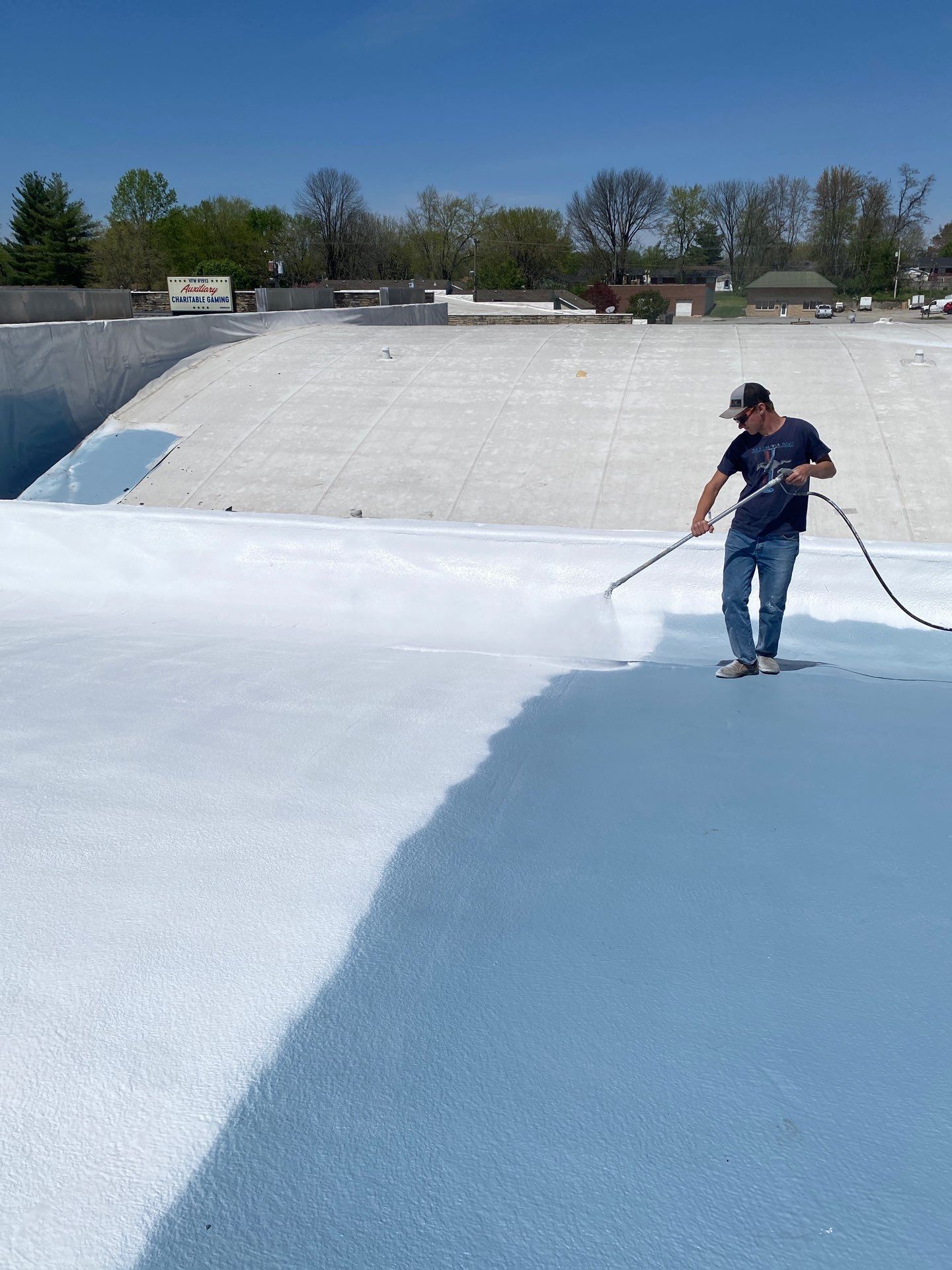
This is the middle path a lot of property owners don't know exists: commercial roof restoration can add 10-15 years of service life to a roof that's aging but not failed, typically for 40-60% less than full replacement.
Signs You're Looking at Replacement
- Widespread moisture intrusion — generally more than 25-30% of the roof surface affected
- Visible sagging or deck deflection, which points to structural damage, not just surface wear
- A pattern of repeated repairs across multiple areas that keep recurring
- The roofing system has exceeded its typical service life (most membrane systems: 20-30 years; metal roofs run much longer but eventually reach failure too)
- The roof no longer meets current insurance, code, or energy requirements for your building
When damage is this extensive, replacement is almost always the more cost-effective long-term decision — continuing to patch a failed system usually costs more over time than doing the job right once.
Why This Is Worth Checking Before You Call Anyone
Here's the honest reason this question matters: repair, restoration, and replacement are priced very differently, and a contractor who leads with the most expensive option before actually inspecting your roof isn't doing you any favors. Knowing roughly which category your roof falls into — using the signs above — means you can ask better questions and evaluate a recommendation instead of just taking it on faith.
That said, these are general guidelines, not a diagnosis. Trapped moisture, deck condition, and structural issues aren't always visible from the surface — a proper assessment usually involves the roofing contractor's own physical inspection of the roof.
Get a Real Answer for Your Specific Roof
A free commercial roof inspection gives you a written, photo-documented answer — which category your roof actually falls into, and why — instead of a guess based on a phone description.
Request a Free Roof Assessment